“Early this morning, law enforcement authorities successfully removed an illegal encampment
…The decision to clear the campsite was made due to consideration of the significant dangers to people inside and outside of the encampment.”
—— Pradeep Khosla’s email, May 6, 2024
“From all we saw since Wednesday, the encampment was entirely peaceful.”
——Faculty Testimony on the UCSD Gaza Encampment
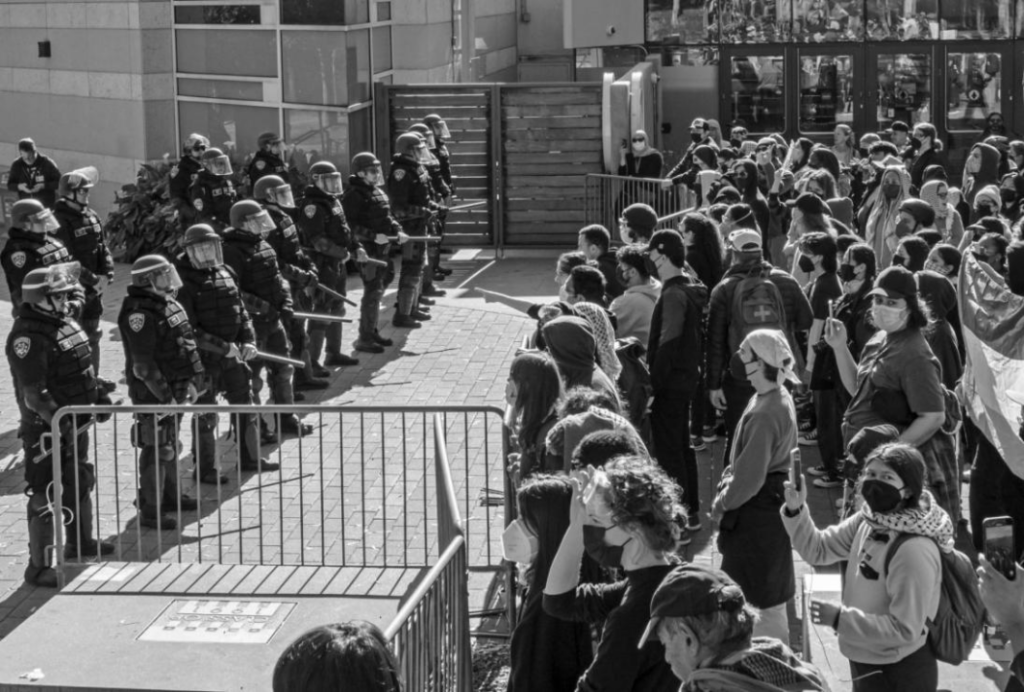
Figure 1: From Gary Fields’s “ERASED” (2025)
I. Decolonizing Epistemology: Rethinking the “Postcolonial Situation” and its historical mirror in the Genocidal Practice and Settler Colonialism in Israeli Occupied Gaza
Since October 2023, Israel persisted in the relentless bombing of Gaza under the title of “counter-attack against Hamas/ terrorism” and radicalized the comprehensive blockade marked by systematic targeting of hospitals, schools, and displacement camps while obstructing humanitarian aid. Humanitarian disasters like starvation of children and devastation of the infrastructure are happening every single day witnessed by the entire world. As NGO Human Rights Watch (2024) verified, these actions constitute exact acts of genocide defined by the international law through the deliberate infliction of conditions calculated to destroy Palestinian life. Their report documents how Israeli authorities have intentionally deprived Gaza’s population of food, water, and medicine, with one Israeli official quoted as saying, “no electricity, no water, just damage”, a policy that transforms deprivation into a weapon of extermination (Human Rights Watch, 2024). This was not an isolated tragedy but a structural occupation and ethnic cleansing on Palestinian existence, enabled by ongoing U.S. military and diplomatic support.
In response to the U.S. government’s continued military aid to Israel, students-led organization Students Justice for Palestine (SJP) and Jewish Voice for Peace (JVP) at UC San Diego organized the Gaza Solidarity Encampment on early May 2024 not just as a replication to the nation-wide movement, but as a necessary statement when petitions and dialogue failed to stop the university’s long-time investment in companies and think tanks tied to Israel’s military industries and war machine. As articulated in the UCSD Guardian’s Publication of Community Response (2024), SJP framed the encampment as a refusal to normalize settler colonial violence and a response to the administration’s unwillingness to engage in dialogue and its repression. Students resisted the university’s efforts to erase their protest through both physical displacement and disciplinary action, while advancing demands rooted in the goals of ending institutional complicity and pushing for divestment. Drawing on Tuck and Yang (2014)’s conceptualization, the encampment became not only a public space for collective dissent and cross-campus solidarity, but also a decolonial “refusal” that disrupted the settler logic of “acceptable” protest and the epistemic frameworks that marginalize Palestinian life and resistance.
To understand this particular decolonization, we must acknowledge the Israel-Palestine conflict is not a single “two-year” war but a century-long settler colonial project along with dispossession and elimination of Palestinian people off their homeland. As Sociologist Michael Burawoy (2025) argues, Zionist occupation over Palestinians operates through land expropriation rather than labor exploitation, resembling the historical reality of apartheid South Africa and racial segregation in the United States (p. 254). These settler states form a historical mirror: in all three, the native population is rendered disposable through spatial fragmentation and permanent exclusion. This structural continuity produces a kind of path dependency, wherein postcolonial states inherit the institutional and ideological apparatuses of settler control. Burawoy calls for sociologists to reject liberal detachment and embed political commitments, warning that neutrality sustains “Israel’s asymmetrical massacre of Palestinians” (p. 250) and obscures the ongoing colonial project under the guise of conflict mediation. Decolonization, in this view, is a epistemological effort that requires that we confront how our frameworks naturalize domination and distort the fact of occupation.
II. Crackdown on Student Protest: Bureaucratic Decision-making, Police Violence, and Fear of Breakdown
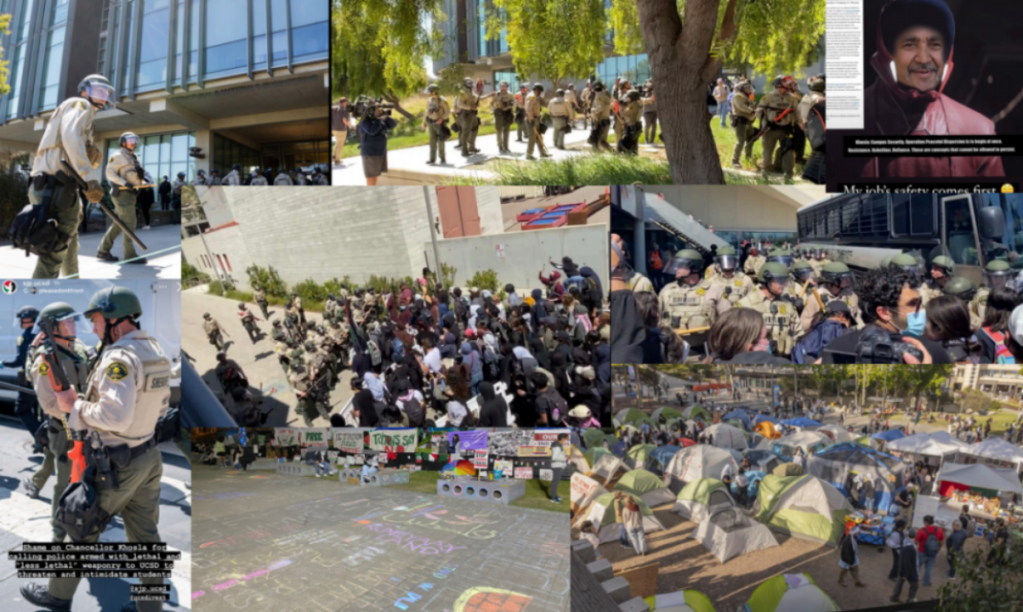
Figure 2: From River Lin’s Midterm Presentation
UC San Diego’s response to the May 2024 Gaza Solidarity Encampment reveals how institutional authority suppressed dissent through both rhetoric and force means. Chancellor Khosla’s emails, labeling the encampment an “unauthorized occupation” and a threat to “campus safety,” exemplified a deliberate designed effort to recast peaceful protest as a security risk. Enacted without democratic consultation or shared investigation, official discourse sought to delegitimize student activism and silence protected speech by accusing their violation of campus policies (PPM 510-1). As the UCSD Guardian reported, the encampment remained peaceful and organized without blocking the passageway, and faculty publicly condemned the administration’s actions as a violation of academic freedom (2025). Drawing on specific university policy, the armed police raid that followed, described by witnesses as “military-style,” led to the arrest of over sixty students and several faculty members. This violent response reflected not a genuine concern for safety, but a fear of disruption and a preference for control. Bureaucracies, co-opted by colonial infrastructures, respond to calls for justice not with dialogue but with repression. Viewed psychoanalytically, the administration’s turn to force over dialogue reveals a deep fear of disorder and a bureaucratic aversion to democratic decision-making, preferring disciplinary control and risk management over engagement or accountability.
Paradoxically, both the La Jolla W-12 burials controversy and the crackdown of encampment echoes how bureaucratic institutions reproduce settler colonial logics through epistemic control and procedural force. In both cases, administrative decisions whether labeling Indigenous remains as “culturally unidentifiable” or framing peaceful protest as a safety threat functioned to erase resistance and reassert institutional violence. As Mayes (2010) argues, settler logic operates by privileging Western classificatory systems while invalidating Indigenous and political claims that disrupt institutional order. As Liboiron (2021) contends, decolonization requires more than inclusion within existing structures; it demands an epistemic shift that exposes how academic practices such as classification serve as tools of control. These incidents expose a systematic postcolonial mindset embedded in public discourse, where fear of disorder overrides democratic engagement. A decolonial stance demands that we recognize U.S. complicity in global industries of complexity, and confront how our institutions naturalize injustice. Decolonizing our decisions-making process and language, and solidarities is a political responsibility shared by all responsible individuals.
III. Silencing the Past: First Amendment Rights, Civil Disobedience, and Practice Democracy in the Age of Constitutional Crisis
Although Chancellor Khosla (re)claimed to uphold free expression, UCSD’s enforcement of PPM 510-1 and the revised PPM 516-10.3 constitutes a direct violation of First Amendment protections. As a state-owned public university, UCSD is legally bound to safeguard expressive conduct in open campus spaces, including symbolic protest. The Gaza Solidarity Encampment including tents, signs, and gatherings falls within this protection. Supreme Court precedent affirms that restrictions on such expression in public forums must be content-neutral and narrowly tailored (Lee, 1989, p. 717-720). Yet PPM 516-10.3, which bans outdoor structures and sleeping without prior approval, was selectively enforced against pro-Palestinian protest, amounting to unconstitutional reinforce “alienizing logic.” Its top-down implementation, absent democratic input, further undermines its legitimacy. Under conditions of constitutional crisis and moral hypocrisy, the encampment should be understood as a principled act of civil disobedience. Drawing on Vincent Blasi’s “pathological perspective,” First Amendment protections are most vital when institutions invoke order and neutrality to suppress dissent (Blasi, 1985, p. 449-452). The students’ refusal to disperse was not lawlessness, but an appeal to a higher constitutional principle: accountability. When democratic procedures fail to confront institutional complicity in settler colonial violence, civil disobedience becomes a form of democratic repair. By reclaiming the campus as a site of nonviolent resistance, students enacted the core values of deliberation, justice, and collective responsibility.
Indeed, the question of Palestine becomes a moral litmus test for our political commitments, and UCSD’s response reveals how deeply our institutions remain entangled in colonial frameworks that suppress dissent and normalize injustice. To stop ongoing humanitarian catastrophes, we must adopt a decolonial stance in both thought and action. This means dismantling settler logics in knowledge production, reclaiming democratic space, and recognizing global justice as a shared ethical responsibility.
References
(1)Tuck, E., & Yang, K. W. (2014). R-words: Refusing research. In D. Paris and M. T. Winn (Eds.), Humanizing research: Decolonizing qualitative inquiry with youth and communities. (pp. 223- 248). SAGE Publications.
(2)Mayes, A. T. (2010). These bones are read: The science and politics of ancient Native
America. American Indian Quarterly, 34(2), 131–156.
(3) Liboiron, M. (2021). Decolonizing geoscience requires more than equity and inclusion. Nature Geoscience, 14(12), 876–877. doi:https://doi.org/10.1038/s41561-021-00861-7
Wildcat, D. R. (2009). Introduction. In Red alert! : Saving the planet with indigenous knowledge. (pp. 3-8). Fulcrum Publishing.
(4) Fields, G. (2024).” ERASED! The eradication of encampment protest at UCSD.” UCSD Guardian.
(5) Burawoy, M. (2025). Why and how should sociologists speak out on Palestine? The Sociological Review, 73(2), 249-260.
(6) Blasi, V. (1985). The Pathological Perspective and the First Amendment. Columbia Law Review, 85(3), 449–514.
(7) Human Rights Watch. (2024, December 19). “Extermination” and acts of genocide: Israel deliberately depriving Palestinians in Gaza.
https://www.hrw.org/report/2024/12/19/extermination-and-acts-genocide/israeldeliberately-depriving-palestinians-gaza
(8) Alex Reinsch-Goldstein. (2025, May 5). UCSD remembers: The Gaza Solidarity Encampment. The UCSD Guardian. https://ucsdguardian.org/2025/05/05/ucsd-remembers-the-gaza-solidarity-encampment/
(9) UCSD PM 510-1 Section IX INTERIM POLICY ON EXPRESSIVE ACTIVITY TIME, PLACE,
AND MANNER. (n.d.). https://adminrecords.ucsd.edu/ppm/docs/510-1.9.HTML
(10) Laura L. Goodman. (1989). Shacking Up with The First Amendment: Symbolic Expression and the Public University. Indiana Law Journal, 64, 711–1015.
Acknowledgements
Primarly, I am deeply grateful to Professor Yuan Yuan for her guidance on jurisprudence to help me understand the concept of “freedom of speech” and “civil disobedience” and to Professor Gershon Shafir for his insightful response to my email on the genocide practice in Israel-Palestine conflict this quarter. I cannot fully understand this complicated topic without their support. I also thank our TA Bahar and lecture instructors Dr. ASA and Dr. Strom for their support throughout the course, as well as my discussion section peers for their thoughtful engagement. Special thanks to Mahhood, the numerous unknown exemplary student activists, and the supporting faculties including Gary Fields, Wendy Mastumura, Lily Hoang, Sarah Schneewind and my history honors thesis supervisor Todd Henry, whose words and speech give me emotional support through my harsh time last spring and continue to inspire my commitment to social justice.
 River Lin
發表留言